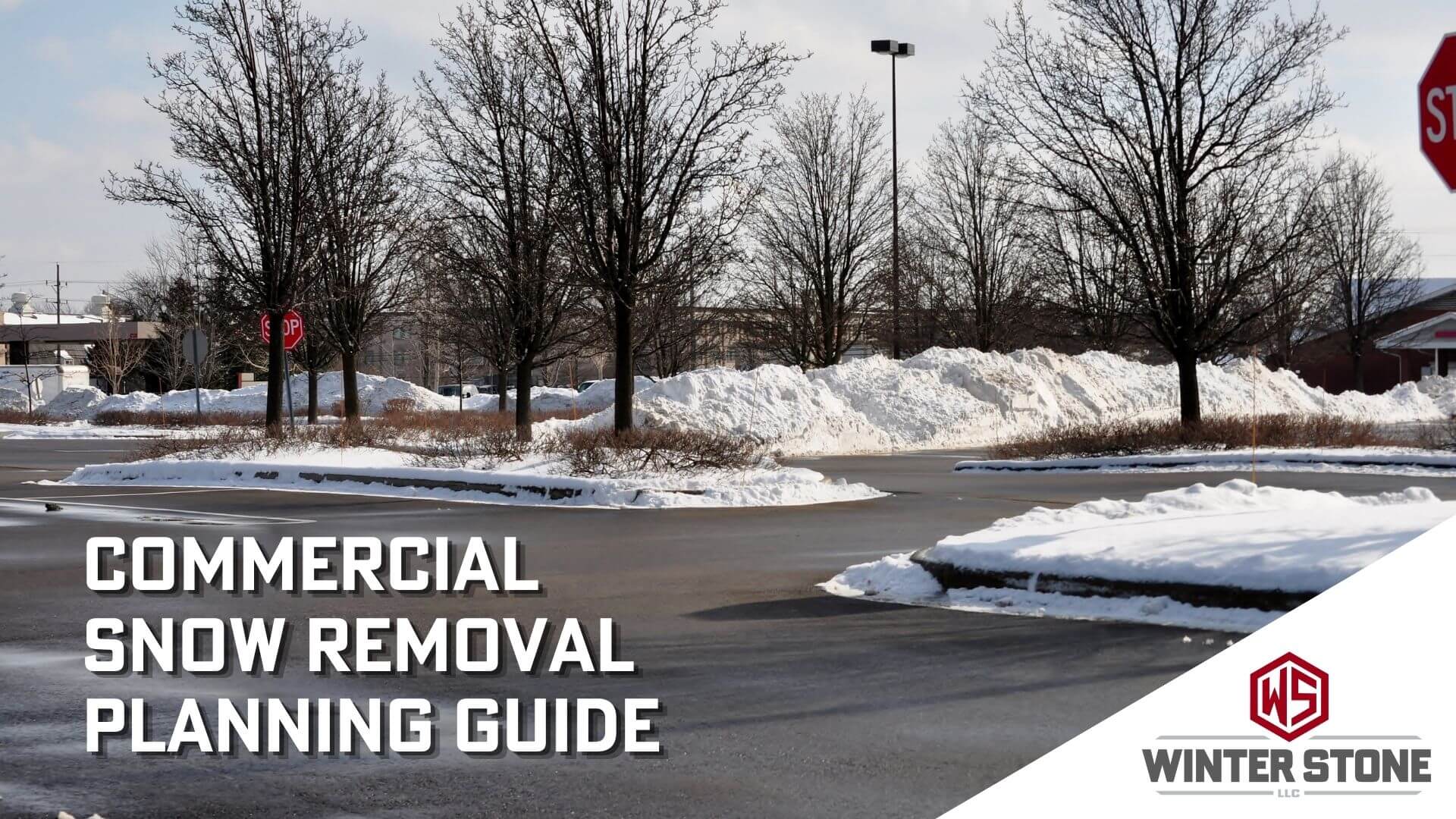
Commercial snow removal takes more planning than waiting for snow to show up in the forecast and calling someone with a plow. When large commercial properties have parking lots, loading docks, entrances, employee traffic, truck traffic, fire lanes, and other areas that need to stay accessible throughout a winter storm, snow removal needs dedicated planning and a serious game plan. That’s why commercial snow removal planning should start well before the first snowfall.
At Winterstone, we work with businesses to develop a commercial snow and ice management plan around the way their property actually operates. That includes deciding when service should begin, what areas need the most attention, where snow will go, what equipment is needed, how ice will be managed, and how everyone will communicate before and during a storm.
If you manage a warehouse, distribution center, industrial facility, retail property, office complex, or another large commercial site, here are some of the most important things to think about when planning for commercial snow removal.
When Should You Start Commercial Snow Removal Planning?
The earlier you can make your commercial snow removal plans, the better. Businesses often wait until November to finalize their snow contracts, but that doesn’t leave much time to prepare before winter weather can arrive. Ideally, Winterstone wants commercial snow agreements and preseason planning completed around October, with preseason meetings taking place before October 15 whenever possible.
There’s more happening behind the scenes than simply putting your property on a plowing schedule. Your snow contractor needs time to understand your site, determine what equipment will be needed, plan where snow will be stacked, identify important areas of the property, prepare materials, and make sure everyone understands what will happen when a winter storm arrives.
The earlier those decisions are made, the easier it is to go into winter with a clear commercial snow removal plan already in place.
Seasonal Vs. Per-Push Commercial Snow Removal Contracts
One of the decisions businesses need to make is how they want to structure their commercial snow removal contract. Two common options are seasonal and per-push agreements.
With a per-push agreement, the customer pays based on the winter events and services performed. If there is very little snow during the winter, that can work in the customer’s favor. However, the contractor is also taking on more of the risk because the amount of work can vary dramatically from one winter to another.
A seasonal agreement gives the business a more predictable snow removal cost for the season. It’s better to think of seasonal commercial snow removal contracts over several years rather than judging them based on one winter. There may be a year with very little snow where the customer pays more than they would have with per-push pricing. Then there may be a heavy winter where the contractor performs considerably more work for the same seasonal price. And over time, those winters tend to balance each other out.
There isn’t one contract structure that is right for every commercial property. The specific agreement should be built around the property, how it operates, the level of service it needs, and the customer’s preferences.
Decide What Level Of Snow And Ice Service Your Property Needs
Not every commercial property can tolerate the same amount of snow. Some snow removal contracts use trigger depths, meaning service begins once snow reaches a certain accumulation. That may work for some properties, but many of Winterstone’s commercial customers operate around the clock.
A warehouse or distribution center with trucks and employees moving through the property 24/7 cannot necessarily wait for several inches of snow to accumulate before service begins. Winterstone works with many properties that are better described as low-tolerance sites. Instead of allowing snow to pile up and dealing with it afterward, the goal is to stay ahead of the storm and continue managing the property throughout the event.
Ice management is part of that planning too. Depending on the weather, Winterstone may use liquid brine, granular deicing materials, or other treatments. In some situations, the property can be pretreated before precipitation even begins. The important thing is that both the customer and contractor understand the expected level of service before winter starts.
Identify Priority Areas And Decide Where The Snow Will Go
One of the most useful parts of commercial snow planning is deciding which areas of the property matter most during a storm. For a warehouse, the loading docks and truck lanes may be critical. Another property may need employee entrances, customer parking, or certain drive lanes cleared first.
Before winter, your snow contractor should understand:
- Which entrances receive the most traffic
- Which loading docks need to stay open
- Which parking areas are most important
- Where employee shift changes create heavy traffic
- Which drive lanes need to remain accessible
- Where emergency and fire lanes are located
- Where snow can be put out of the way
Winterstone works with customers to identify snow stacking areas before the season begins. That helps prevent snow piles from taking away important parking spaces, blocking traffic flow, or interfering with daily operations. You should also determine what happens when those normal snow stacking areas fill up. During larger storms or a series of storms, snow may eventually need to be relocated or hauled away. Those decisions are much easier to make before your parking lot is already covered.
Make Sure Your Snow Contractor Has The Equipment And Materials To Handle Your Property
A large commercial property requires more than a pickup truck with a plow. Winterstone plans equipment around the needs of individual sites, and many properties have specific machines assigned to them. For large facilities, some equipment may stay at the property so it is ready when winter weather arrives.
Materials matter just as much as equipment. Winterstone typically keeps enough granular salt, sidewalk material, and brine available for approximately three winter events. That becomes important when storms arrive close together. When winter storms come back to back, having materials already on hand helps Winterstone continue servicing properties without waiting to restock. But this is only possible with snow removal planning in advance.
Communication Is A Major Part Of Commercial Snow Removal Planning
A commercial snow removal plan works much better when the property manager and contractor communicate well. Winterstone uses a 48-hour, 24-hour, and 12-hour communication process as winter weather approaches.
- Around 48 hours before a possible event, customers receive an early notice about what may be coming
- At approximately 24 hours, the forecast is usually becoming clearer, and another update can be provided
- Around 12 hours before the event, the communication becomes more specific about the plan for that storm
Communication should also go the other direction. If something changes at your property, you should let your snow contractor know. A blocked loading area, construction project, change in employee shifts, or new traffic pattern can all affect the snow removal plan. Good communication makes it much easier for everyone to adjust before a small issue becomes a larger problem during the storm.
What Happens During A Commercial Snow Removal Preseason Meeting?
The preseason meeting is where all of the commercial snow removal planning comes together.
Typically, these meetings are best completed before October 15. The goal is to make sure the customer and snow contractor have the same expectations before winter begins.
During the meeting, you may discuss priority areas, loading docks, employee shift changes, entrances, emergency lanes, snow stacking locations, equipment needs, ice management, problem areas, and communication expectations.
The most important part is making sure both sides understand the plan. Winterstone needs to know how your facility operates and what areas matter most to your business. You need to know what to expect from your snow contractor when winter weather hits.
Start Your Commercial Snow Removal Planning Before Winter
Commercial snow removal should not begin with the first snowflake. Planning ahead gives your business time to work through contracts, service expectations, equipment, ice management, priority areas, snow stacking, and communication before a storm is bearing down on your property.
Every commercial property operates differently, which is why Winterstone builds its snow and ice management approach around the individual customer. with customers throughout the entire winter, not just when snow is already accumulating. By planning equipment, materials, priority areas, snow storage, and communication ahead of time, we can go into each storm with a clear plan for your property. We also help your business in winter with brine for snow-melting, commercial brine hauling services, truck brushing services, and more.
If your business needs commercial snow removal this winter, contact Winterstone and start putting your commercial snow removal plan together before the first storm arrives.
